
55S | Exploring the Dynamics of Jueteng: The Influence of 55S
55S’s Dive into the complex world of Jueteng, a popular yet illicit numbers game in the Philippines, and see how the emerging influence of '55S' may be shaping its future.
Understanding Jueteng in the Context of 55S
Jueteng is a centuries-old numbers game in the Philippines. It has become embedded in Filipino culture and society, often operating outside legal parameters. Despite attempts at regulation and eradication, Jueteng continues to thrive due to its deep-rooted appeal and the complex socio-political dynamics involved. One of the intriguing aspects of Jueteng today is its relation to '55S', a term that has begun to surface in the discourse surrounding this illicit activity.
A Historical Overview of Jueteng
Originating in China, Jueteng was brought to the Philippines during the Spanish colonial period, becoming deeply ingrained in local communities. Traditionally, it involves betting on number combinations drawn randomly. Although seemingly simple, Jueteng’s networks are extensive and sophisticated, often involving small neighborhood operators all the way to influential local and national figures.
For decades, Jueteng has been both condemned and ignored by authorities, partly because the proceeds often trickle up the political ladder, lining the pockets of those in power. Its perennial presence is indicative of the socio-economic conditions in regions where formal systems have failed to provide sufficient opportunities.
The Mechanics of Jueteng
Understanding the mechanics of Jueteng involves delving into how bets are collected and winners determined. Bets are typically placed through a kubrador, or a betting collector, who liaises with a cabos, managing collections and forwarding them to the bankeros who decide results and payouts. Results are not standardized, relying instead on the local draw or sometimes even concocted results to prevent massive payouts.
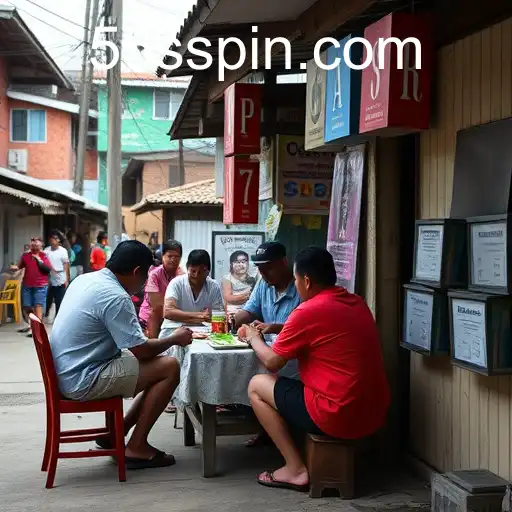
This system thrives on community integration where trust plays a significant role. Despite its illegality, the local perception of Jueteng is often benign or supportive because it provides livelihoods and a semblance of community activity. Attempts at suppressing Jueteng often falter because of these entrenched community connections.
The Legal and Ethical Quandary
Efforts to legalize Jueteng have been mooted periodically as a way to harness and tax its economic flow. However, these efforts clash with significant public opposition and ethical considerations regarding gambling. Still, the juxtaposition of legal versus illegal gambling in the Philippines manifests as an ongoing debate, one that implicates daily livelihoods, ethics, and politics.
The government’s dilemma is compounded by potential revenue versus moral considerations, with the populace often split. Many advocates of legalization view it as a practical step towards regulation and state benefit, while others stand firm against legitimizing what is traditionally seen as a vice.
55S: A New Dynamic?
The mention of '55S' in conversations around Jueteng is an emerging development. Though information is sporadic, there are indications that 55S may relate to new methods, systems, or variations of Jueteng that resonate with modern technological advancements or particular regional adaptations. It aligns with a broader narrative about how such traditional activities adapt and metamorphose in response to changing technologies and socio-political landscapes.
This evolution could indicate several developments like an increase in digital influence, potentially hiding activities better to avoid detection. As yet, detailed public information about 55S remains scant, leaving observers to conjecture on its implications and longevity within the Jueteng landscape.
The Socio-Economic Impact
The socio-economic influence of Jueteng extends beyond mere money circulation. It is intertwined with livelihoods, political patronage, and social order. In regions where economic opportunities are scarce, Jueteng serves as a financial crutch for many who rely on the small commissions or winnings it generates.
Politically, Jueteng has far-reaching ramifications. It underpins a shadow economy that sustains political machineries, sometimes even influencing electoral outcomes. Local politicians often engage with Jueteng operators in a symbiotic relationship, using the networks as leverage for votes or as a financial engine for campaigns.
Attempts at Reform
Throughout history, attempts at reforming the Jueteng landscape have oscillated between aggressive crackdowns and passive acceptance. These efforts relate to broader movements tackling corruption and crime, managing to suppress Jueteng only temporarily. Long-term success has remained elusive as the stakeholders pivot and adapt quickly to changes.
Community education and economic development initiatives often surface as alternative solutions. By addressing the root causes that make Jueteng appealing, such as poverty and lack of social services, reformists hope to reduce its societal grip. Yet, these solutions demand sustainability, significant investment, and political will, which are challenging to ensure consistently.
Conclusion
Jueteng exemplifies the complexity of illegal gambling in the Philippines. As long as the socio-political and economic structures that support it remain, Jueteng is likely to persist in some form. Understanding the socio-cultural dynamics that allow it to flourish is key to addressing or integrating it within legal frameworks. Whether masked in tradition or modernized through terminologies like 55S, Jueteng remains an indelible part of Philippine society.
